


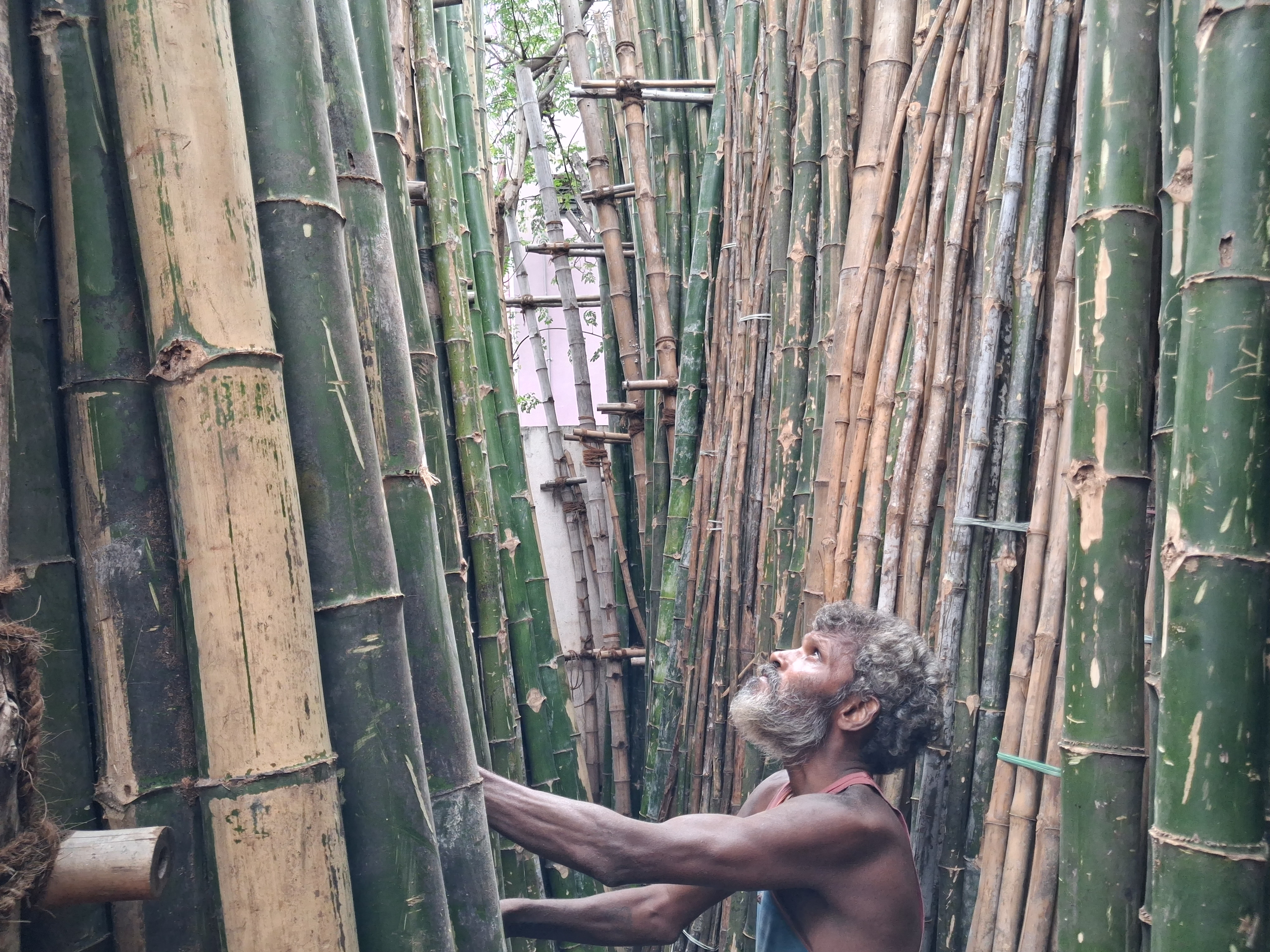
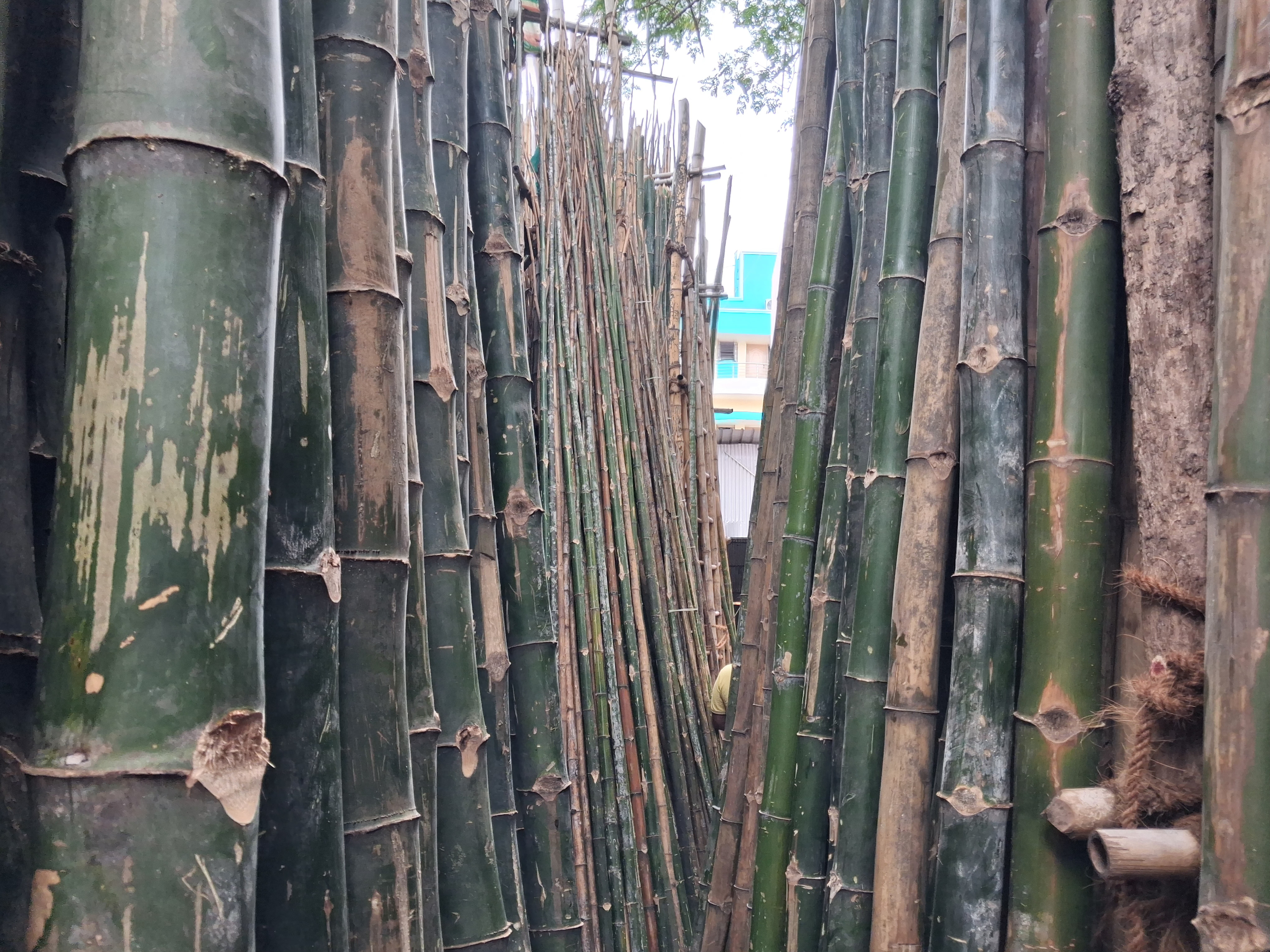
While walking through the streets of Azhwarpuram in Madurai, one can see artisans busy crafting things out of bamboo. Amid the city's hot weather, a small space filled with tall bamboo poles feels cool. The sight makes it feel as though one is stepping into a bamboo forest.
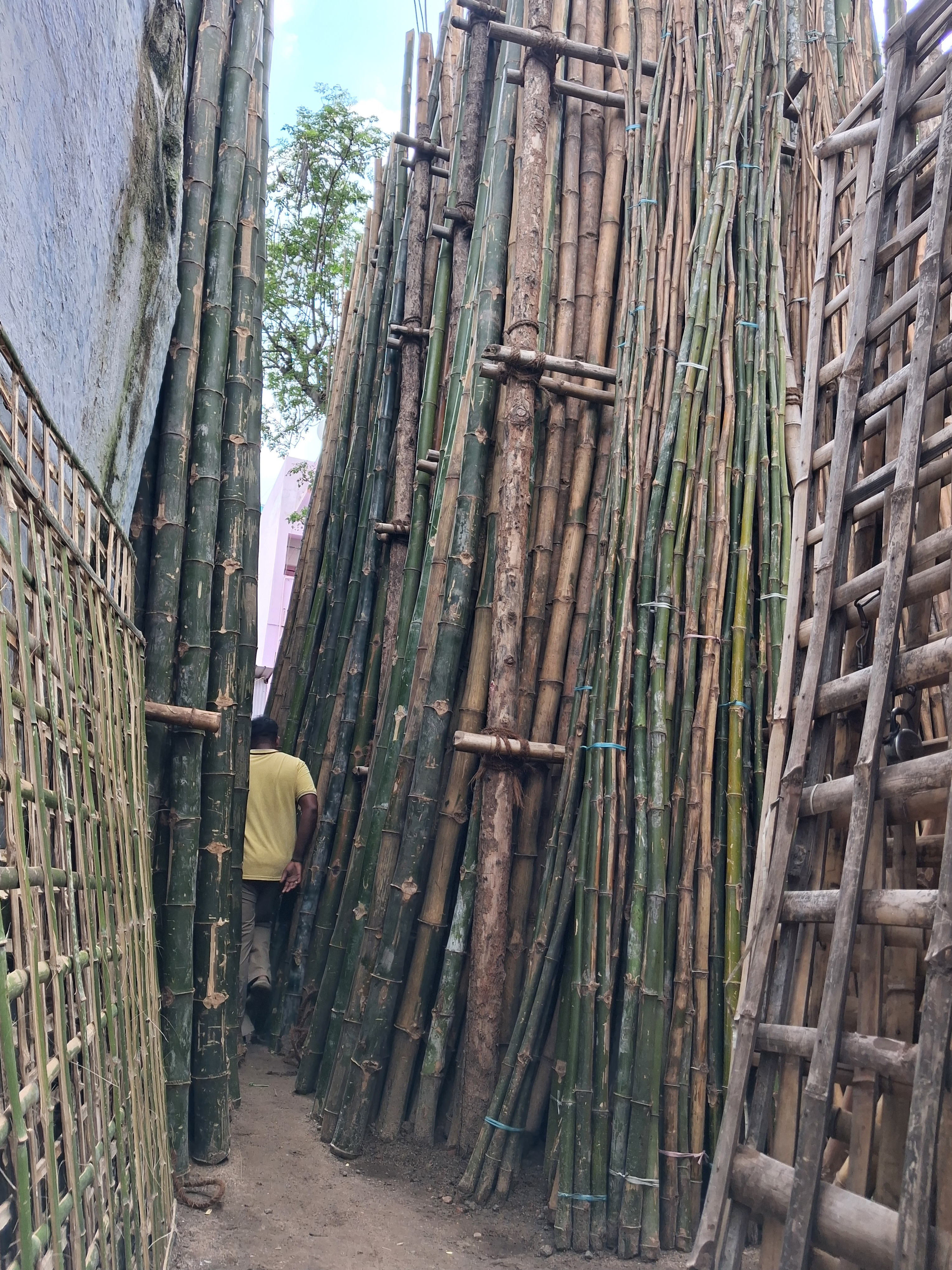
Anish Kumar, who has been running a bamboo business in the city for more than 40 years, says the business was started by his father. The bamboo poles, which are mostly around 22 feet tall, are sold across the State. The family has been in this business for decades.
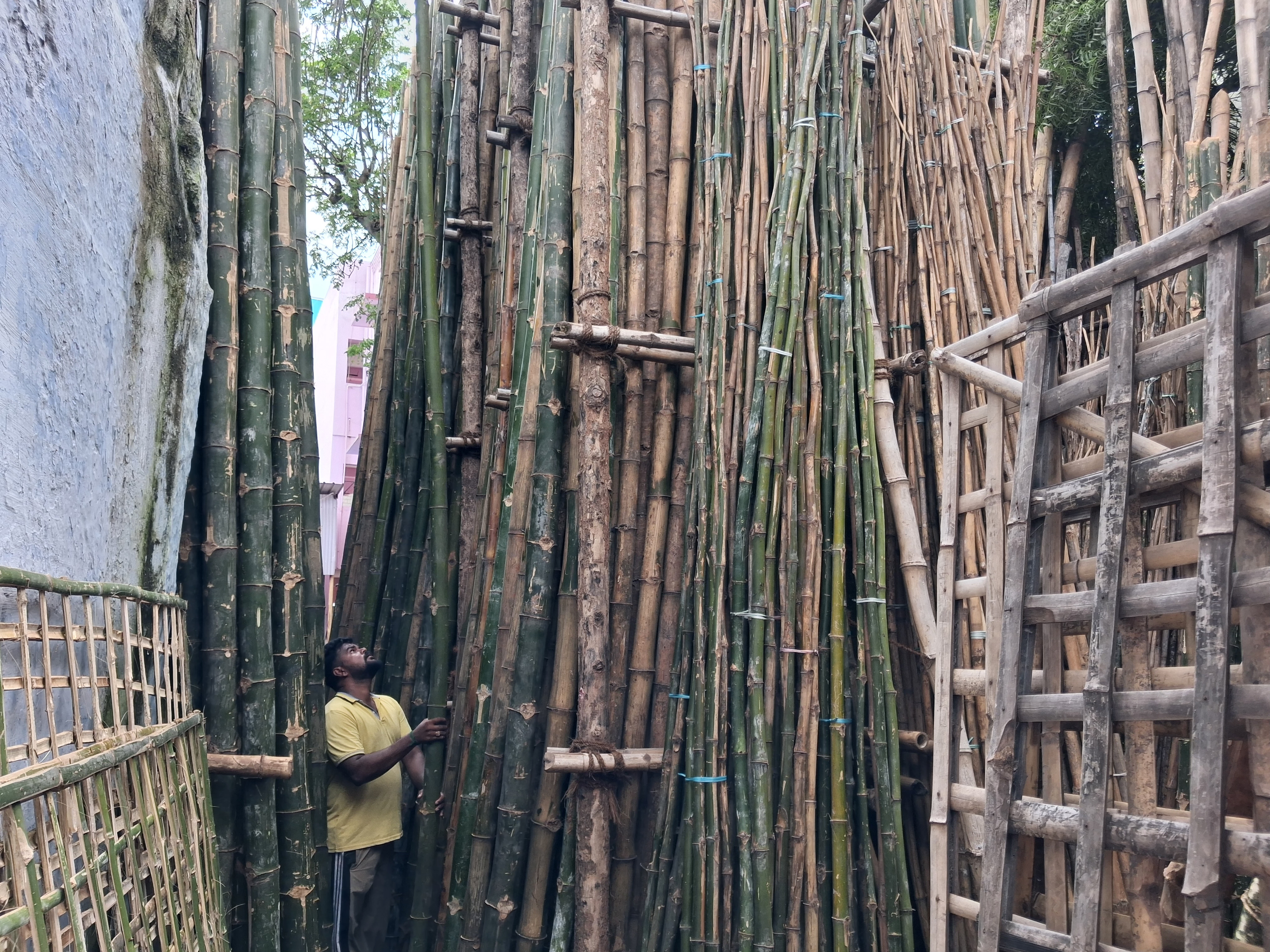
During our conversation, he explained that bamboo has several benefits, including keeping the surroundings cool even in hot weather. Though bamboo has been traditionally used for various purposes, its use has declined sharply as people increasingly turn to plastic and other artificial materials, he said.
When asked about the source of the bamboo, he says that most of it comes from Kerala, where it grows naturally in the hills. According to him, this bamboo is more durable and can withstand changing weather conditions. “We also get bamboo from Thanjavur, where it is cultivated like paddy and other crops,” he says.
He also said there are more than 100 varieties of bamboo. For instance, some varieties grown in the northern parts of the country are hollow inside and are used for home interiors. However, when exposed to the sun for long hours, the dried bamboo can suddenly start to crack. Bamboo grown in the southern parts, on the other hand, is stronger but less flexible, he explained.
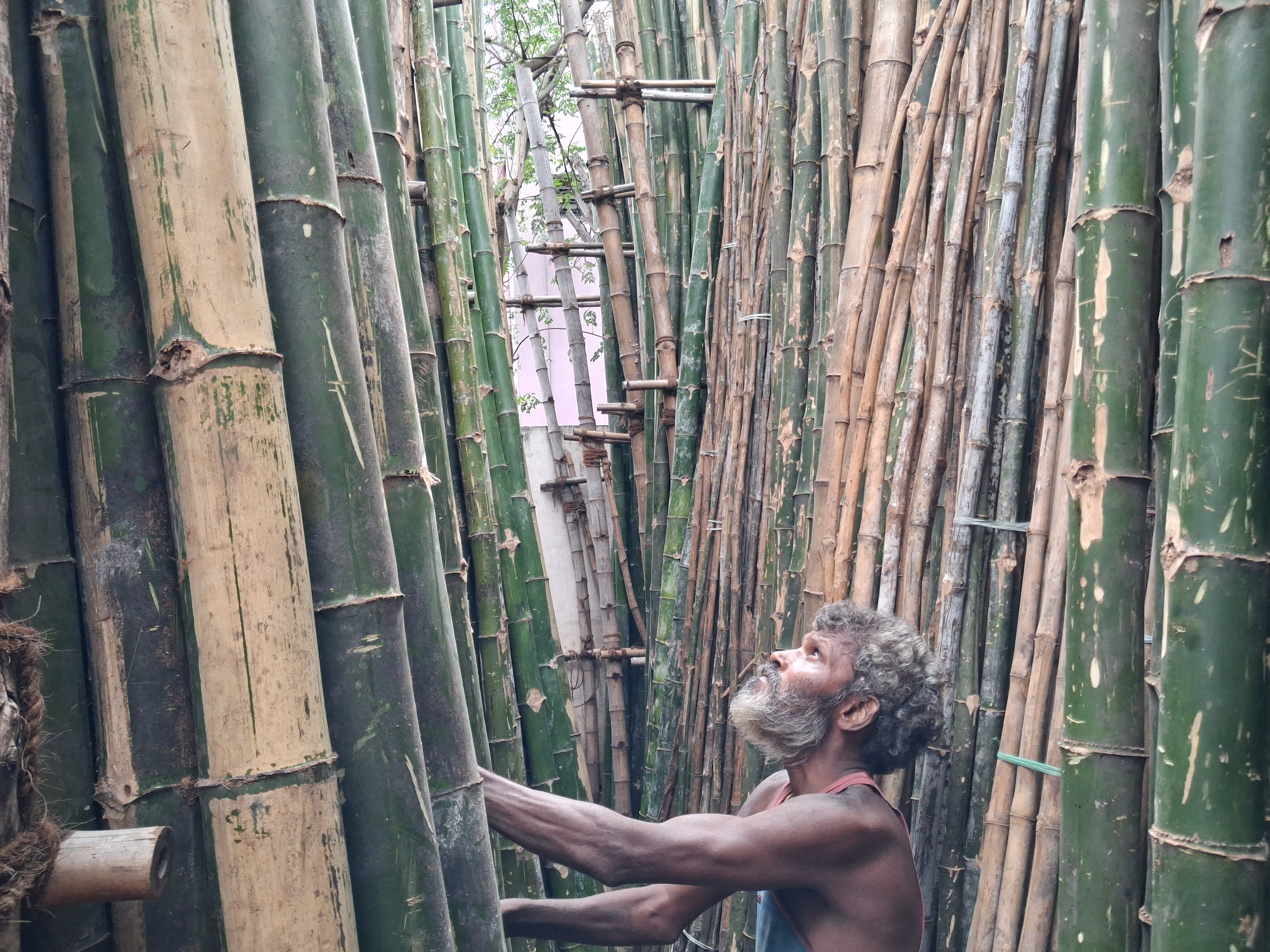
Pointing to the different bamboo products displayed at the shop, he explained that they sell a variety of items, including broomsticks, silambam sticks, blinds and partitions. Bamboo is also used in construction for roofing and compound walls.
Beyond these everyday products, bamboo finds a place in home interiors, where it is used to make room partitions and ceilings. It is also combined with steel in compound wall construction to help reduce costs. Its uses extend to gardening and decorations as well. During temple festivals, bamboo is used to put up pandals and support decorative serial lights, he said.
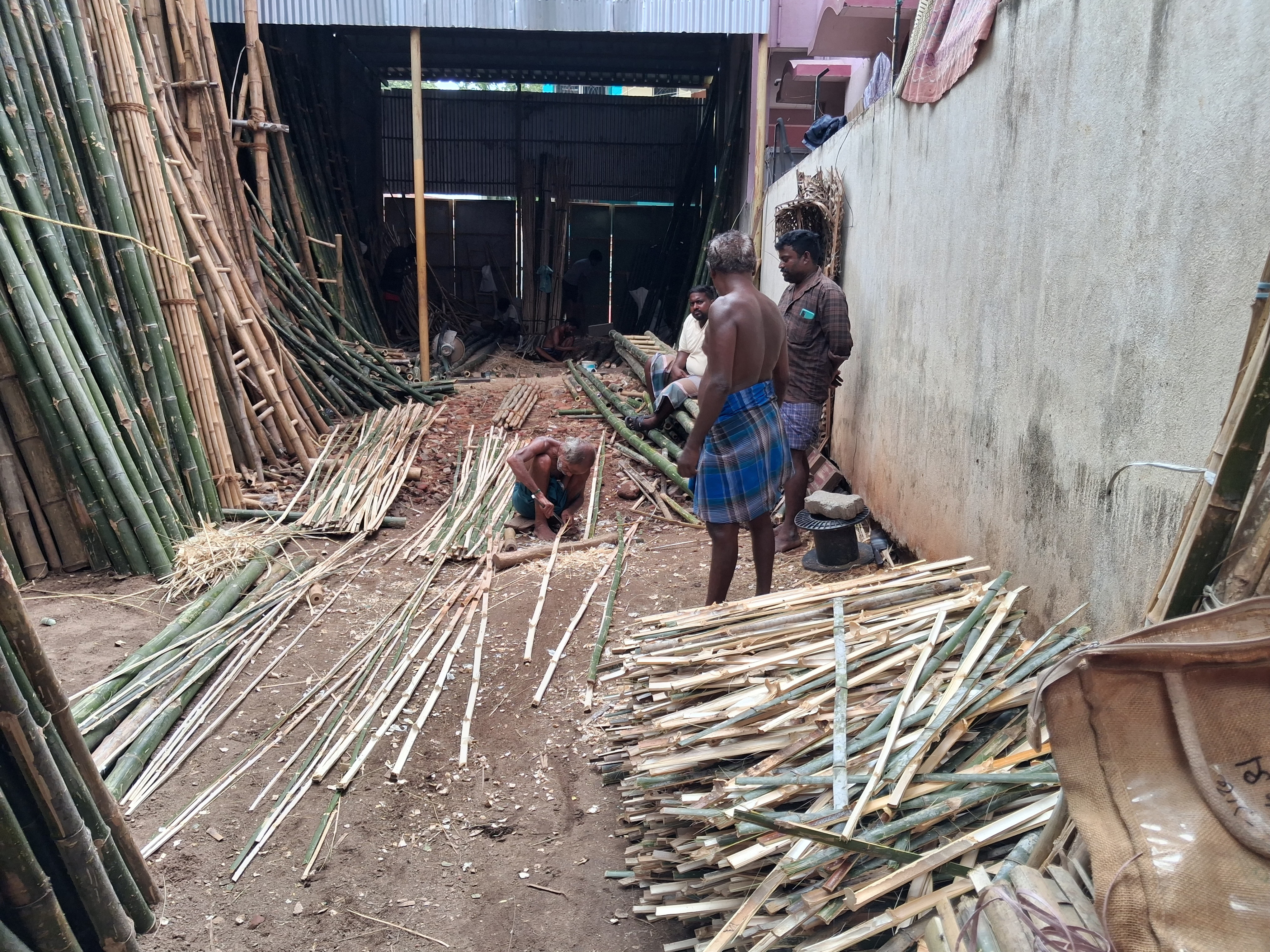
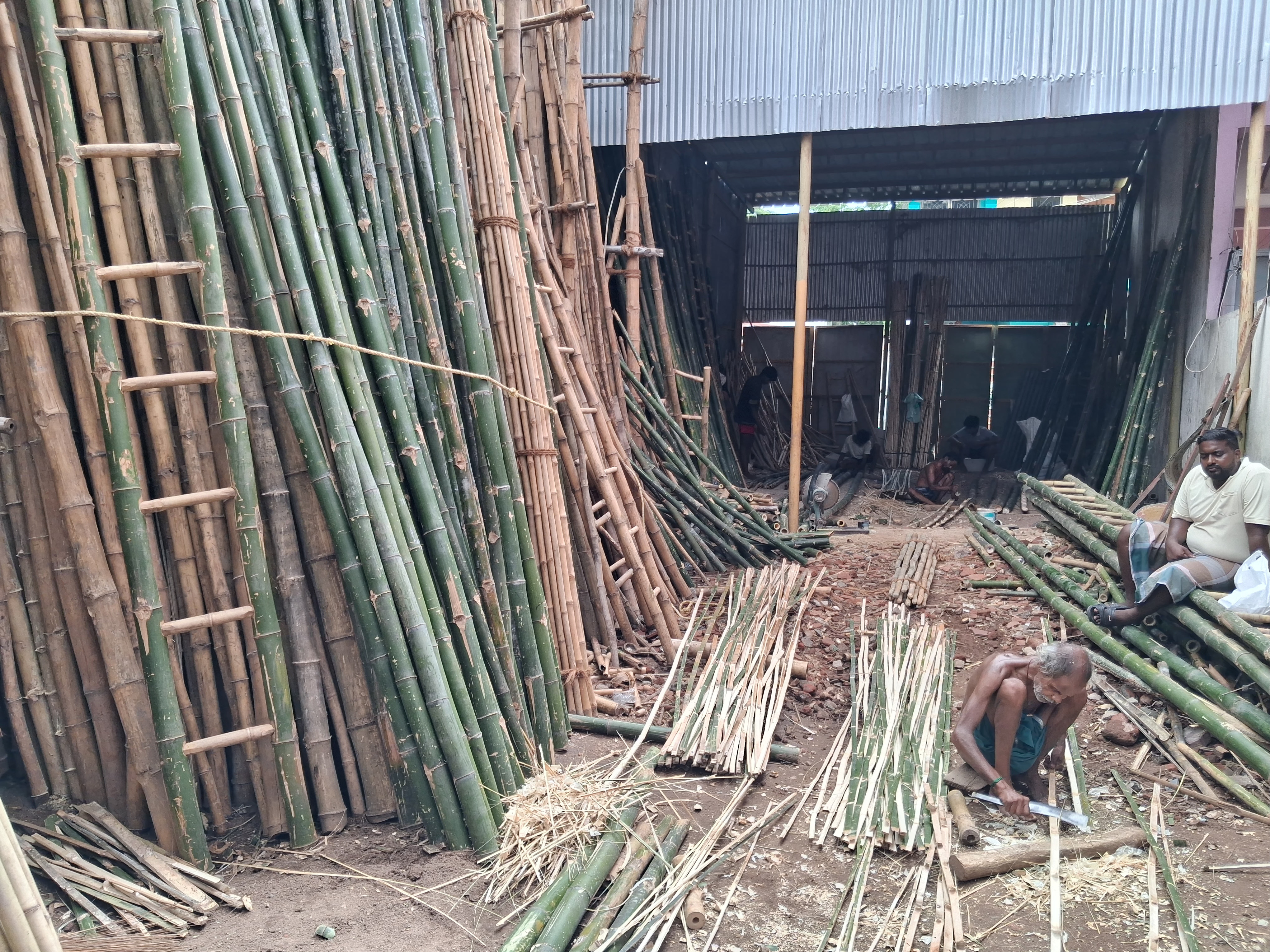
He explained that each bamboo stalk is cut and split by hand using traditional tools such as sickles and knives. The size of each piece is adjusted according to the customer's needs. Splitting a single bamboo stalk takes about 30 minutes, and one worker can split up to 15 stalks a day, depending on the workload.
The cost of bamboo varies according to its size and quality, with each stalk priced at around ₹150 to ₹200. The labour charge is about ₹100 for a large stalk and ₹60 for a smaller one.
However, the demand for bamboo has declined slightly in recent years as people increasingly turn to alternatives such as plastic and steel. Despite this, bamboo continues to be used in many construction projects because of its durability and relatively low cost, he said.
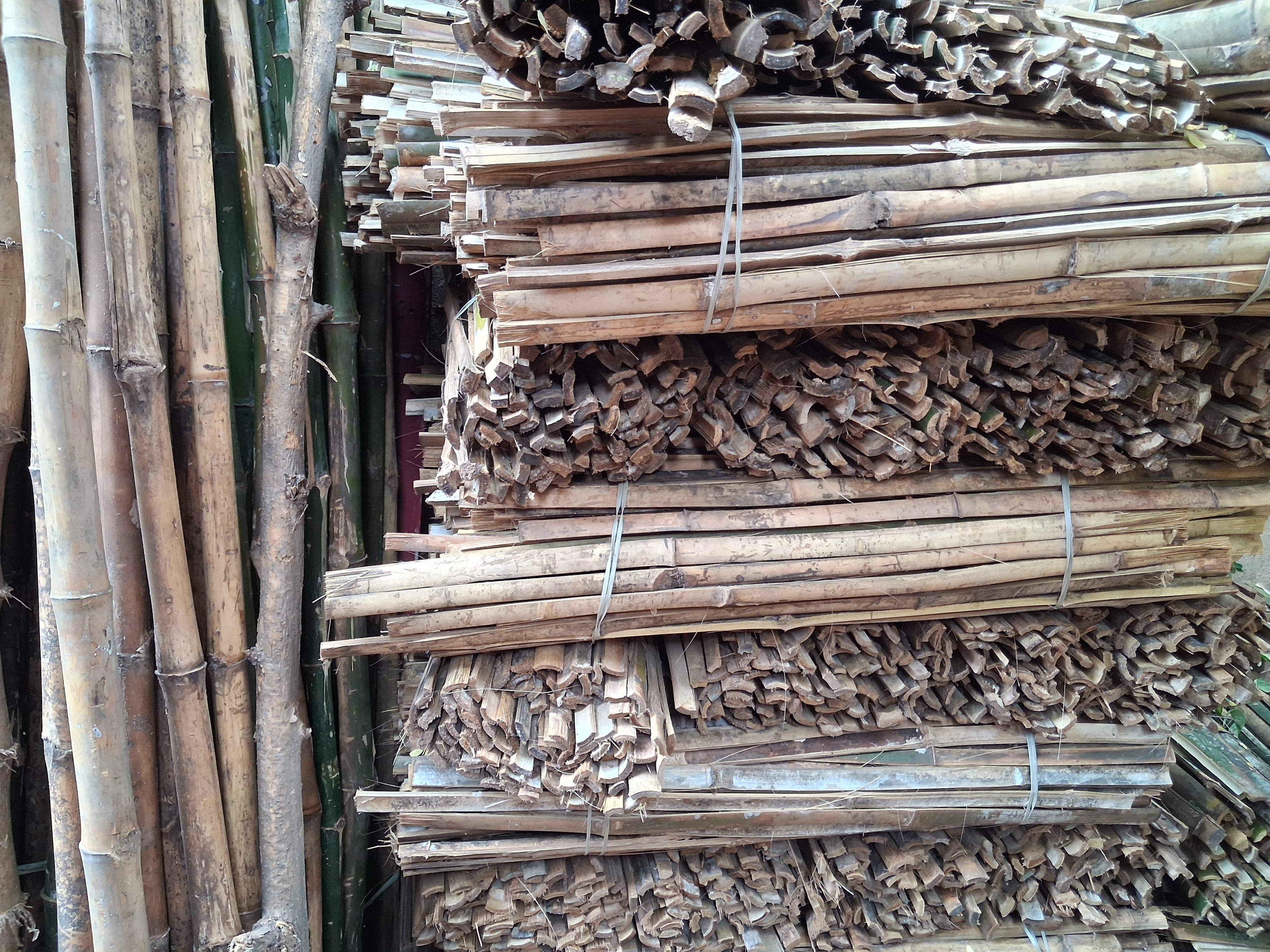
Despite the growing use of plastic and steel, bamboo continues to find a place in homes, construction and traditional practices. For artisans like Anish, each stalk is more than just a raw material; it is a part of their livelihood. As its use slowly declines, keeping this traditional craft alive remains a challenge.