


The Indian Space Research Organisation (ISRO) has successfully launched its next-generation navigation satellite, NVS-03, aboard the GSLV-F18 rocket, giving a boost to India's efforts to strengthen its own satellite navigation system, NavIC.
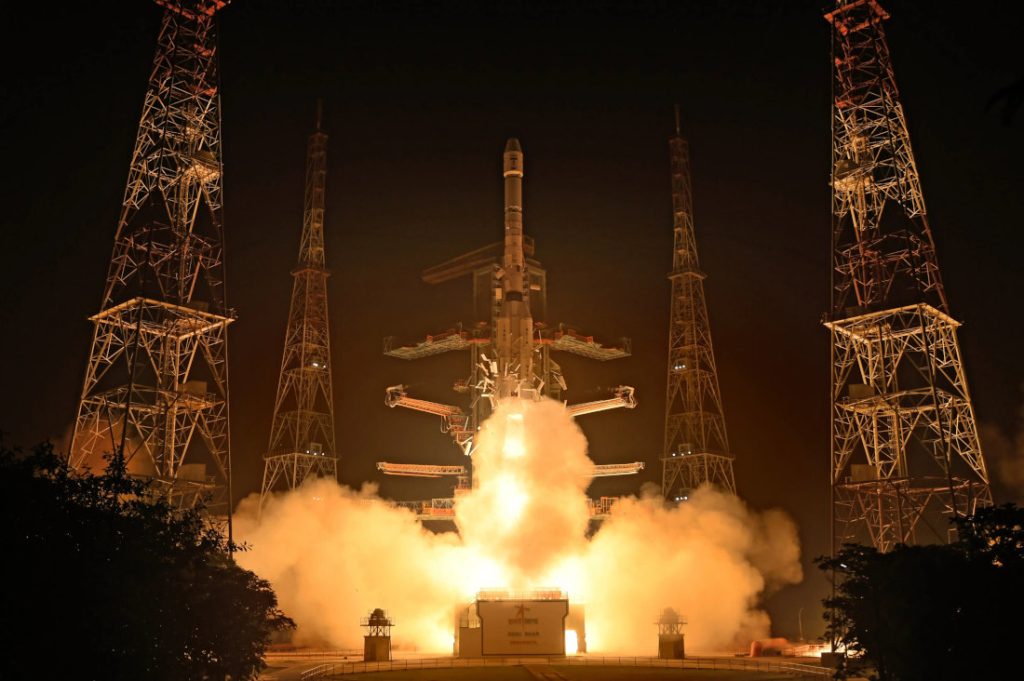
The launch took place at 11.51 p.m. on Friday from the Second Launch Pad at the Satish Dhawan Space Centre in Sriharikota, Andhra Pradesh. The mission marked the 20th flight of the Geosynchronous Satellite Launch Vehicle (GSLV).
Weighing 2,250 kg, NVS-03 was placed in a Geosynchronous Transfer Orbit (GTO) more than 20 minutes after the rocket lifted off. ISRO chief V. Narayanan announced the successful completion of the launch and congratulated the scientists, engineers and industry partners involved in the mission.
NVS-03 is the third satellite in India's second-generation navigation satellite series. It is designed to maintain the availability of navigation services provided by the Navigation with Indian Constellation (NavIC).
NavIC is India's independent satellite navigation system and serves as an alternative to global systems such as the United States' GPS. It provides positioning and timing services across the Indian mainland and an area extending around 1,500 km beyond the country's borders.
The system supports several applications, including road and maritime navigation, disaster management, precision agriculture and defence operations.
One of the key features of NVS-03 is its indigenous atomic clock, which will work alongside procured atomic clocks. This is an important step in developing India's own technology for accurate navigation and timing services.
The satellite will also introduce the L1 frequency signal in addition to the existing L5 and S-band signals. The new signal is expected to make NavIC more compatible with navigation receivers and consumer devices, helping expand its use.
The mission follows a setback in January 2025, when its predecessor, NVS-02, was placed in a transfer orbit but could not reach its intended operational position. A problem with the electrical activation of a pyrotechnic valve prevented the satellite's Liquid Apogee Motor from receiving the required oxidiser supply.
ISRO has introduced corrective measures for NVS-03 to avoid a similar problem. However, the satellite must still carry out a series of orbit-raising manoeuvres using its onboard propulsion system before reaching its designated operational orbit.
The successful launch is an important step in strengthening India's navigation infrastructure and reducing its reliance on foreign satellite navigation systems. It also supports ISRO's plans to complete the second-generation NavIC constellation with the upcoming NVS-04 and NVS-05 satellites.